The Hidden Cost of Acceptance
Acceptance doesn't just increase risk. It changes how people think.
Violence against healthcare workers leaves visible consequences. Physical injuries, psychological trauma, time away from work, turnover, and compensation claims are all well documented. These harms matter, and they deserve serious attention. Yet there is another cost that receives far less attention. It develops slowly, is rarely measured, and may ultimately have a greater impact on organizational culture than the incidents themselves. It is the gradual acceptance that meaningful improvement is unlikely.
The First Thing Organizations Lose Is Curiosity
Healthcare professionals are naturally curious. When something goes wrong, they ask questions. Why did this happen? What can we learn? How do we stop it happening again? That curiosity drives improvement because it challenges organizations to look beyond the immediate event and search for opportunities to make future harm less likely.
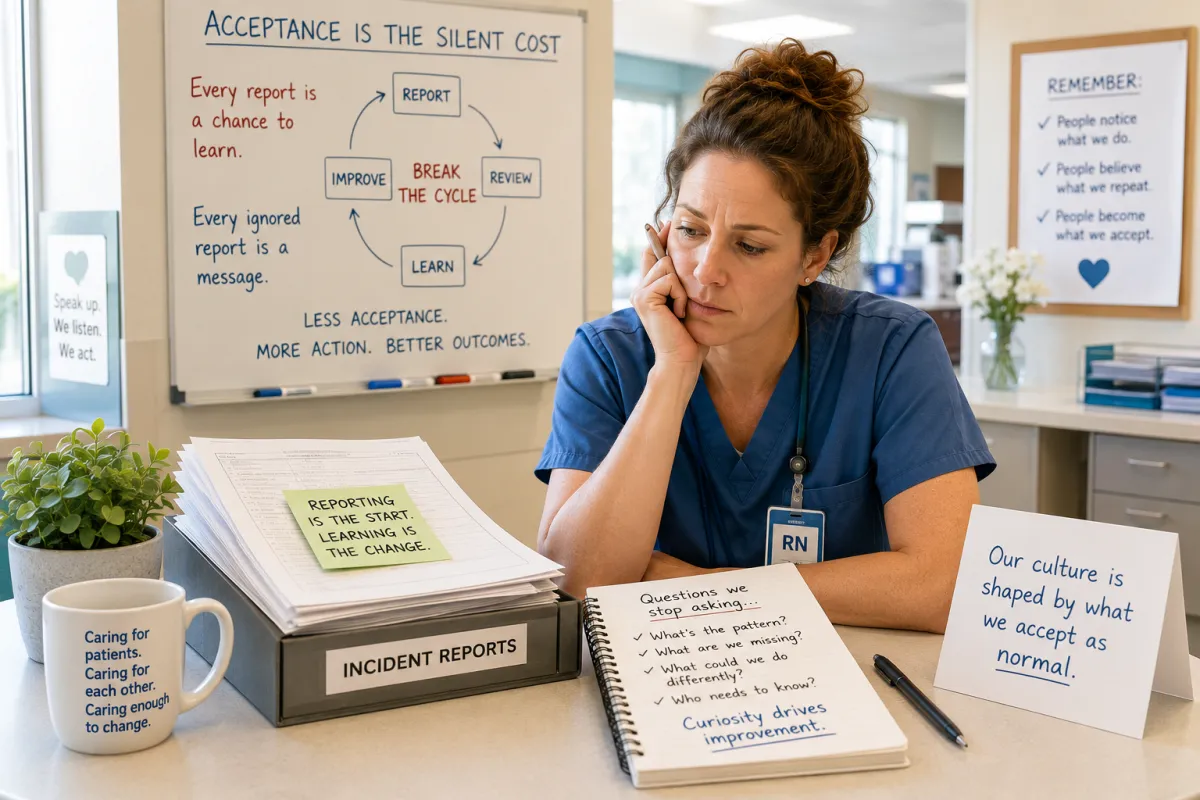
However, repeated exposure to the same problems without visible change gradually alters those expectations. Staff begin to notice that familiar concerns produce familiar responses. Incident reports are submitted. Meetings are held. Recommendations are made. Yet little appears different months later. Eventually, people stop asking the questions they once believed would matter, not because they no longer care, but because experience has taught them that the answers rarely lead to meaningful change.
Confidence Fades Long Before Commitment Does
Most healthcare workers remain deeply committed to their patients and colleagues, even in difficult circumstances. What often changes is not their commitment, but their confidence that the organization is capable of improving the conditions they face. That distinction matters because people can continue delivering excellent care while quietly losing faith that the system around them is capable of learning.
When repeated concerns fail to produce meaningful action, optimism slowly gives way to resignation. Staff continue doing their jobs because they care about the people they serve, not because they believe the system will change. Over time, that quiet loss of confidence begins influencing how people think about reporting concerns, participating in improvement initiatives, and raising difficult questions.
Expectations Shape Organizational Culture
Every organization teaches its staff what to expect. If reporting concerns consistently leads to investigation, learning, and action, employees come to expect improvement. They continue speaking up because experience tells them their efforts matter and that their voices can influence change.
The opposite can also occur. If concerns repeatedly disappear into administrative processes without visible outcomes, staff begin to expect that little will change. Over time, that expectation becomes part of the organizational culture. It influences reporting, engagement, participation, and even the willingness to suggest new ideas. Acceptance is rarely announced. It is learned through repeated experience.
The Most Dangerous Sentence(s)
Every workplace develops phrases that reveal its culture. "We've always done it this way." "That's just part of the job." "Nothing ever changes." Those statements rarely appear in policies, yet they may reveal more about organizational culture than any formal document.
When people stop expecting improvement, they also stop looking for opportunities to create it. That shift is subtle, but it changes how organizations respond to risk long before anyone recognizes that their culture has changed.
Predictability Is Affected by Expectations
Predictability Lead Time™ proposes that organizations should ask when violence could reasonably have been recognized as becoming predictable. That question depends not only on the availability of information, but also on whether people remain willing to examine what the information is telling them. Data has little value if the organization no longer expects it to reveal opportunities for improvement.
An organization that still expects improvement continues looking for patterns, questioning assumptions, and challenging existing practices. An organization that has accepted the status quo may possess exactly the same information while seeing far less of what it reveals. The data has not changed. The mindset has.
Acceptance Is More Contagious Than Violence
Violence affects the people directly involved. Acceptance spreads much further. New employees quickly learn what experienced colleagues expect. If they hear that reporting rarely changes anything, they begin their careers with lower expectations than those who came before them. Over time, acceptance passes from one generation of staff to the next, quietly becoming part of the workplace culture.
That may be one of the greatest hidden costs of all. Organizations rarely measure the loss of curiosity, the erosion of confidence, or the disappearance of hope that improvement is possible. Yet those losses shape culture every day.
The Real Measure of Progress
Reducing workplace violence will always remain an important goal. Equally important, however, is preserving the belief that improvement is possible. Organizations that continue asking difficult questions, examining uncomfortable evidence, and challenging long-standing assumptions protect something that cannot easily be measured.
They protect curiosity, confidence, and the expectation that tomorrow can be safer than today. Those qualities sustain learning, encourage staff to continue speaking up, and keep organizations moving forward. They may also be among the most valuable safety resources any healthcare organization possesses.
#HealthcareLeadership #WorkplaceCulture #HealthcareSafety #WorkplaceViolence #PatientSafety #OrganizationalLearning #SafetyCulture #RiskManagement #PredictabilityLeadTime #PredictabilityInstitute